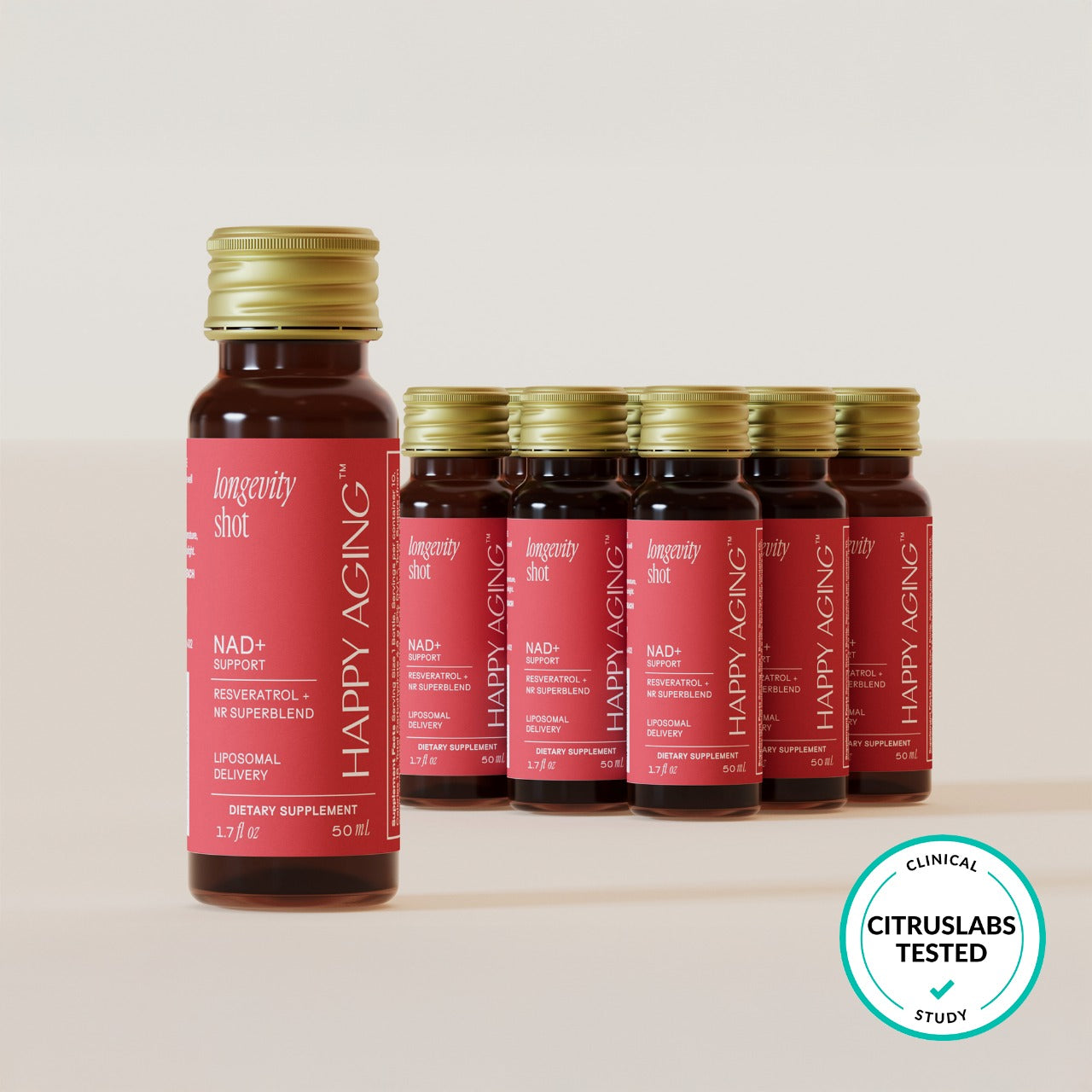
There is a moment most women recognize, somewhere in their mid to late 30s, when the rules seem to change. The energy that once carried you through long days fades by mid afternoon. Your skin loses a certain brightness that no serum can restore. Sleep that once felt restorative now leaves you groggy, and your body starts responding to stress, food, and exercise in unfamiliar ways. These shifts are not just getting older, they reflect something measurable at the cellular level, your NAD+ levels are dropping. NAD+ (Nicotinamide Adenine Dinucleotide) is a coenzyme present in every cell of your body. It is essential for more than 500 enzymatic reactions, including energy production, dna repair, immune function, and the activation of longevity related proteins called sirtuins. In simple terms, NAD+ is the fuel your cells need to function, repair, and protect themselves. The problem is that NAD+ levels do not stay constant. Research shows they decline significantly with age, and the drop can be especially steep for women because of hormonal changes that accelerate after 35. How much NAD+ do you lose and how fast? Studies on human tissue samples reveal that NAD+ levels can decrease by 50% or more between young adulthood and middle age. Some research on liver and brain tissue shows reductions of 10% to 25% in NAD+ between your 20s and 60s, though individual variation is significant. What makes this especially relevant for women is the intersection of NAD+ decline and hormonal transitions. During perimenopause and menopause, typically beginning in the early to mid 40s, estrogen and progesterone fluctuations create additional metabolic stress. Estrogen has a protective effect on mitochondrial function, so as estrogen levels drop, mitochondria become less efficient at producing energy. Combined with falling NAD+ levels, this creates a compounding effect, less cellular fuel and less capacity to use it. This is why many women describe the transition into their 40s as feeling like a sudden shift, even though the underlying changes were happening gradually for years. What NAD+ decline feels like in daily life Low NAD+ does not announce itself with a single dramatic symptom. Instead, it appears as a collection of changes that are easy to dismiss individually but paint a clear picture together. Persistent fatigue is often the first sign Your mitochondria, the energy generators inside every cell, depend on NAD+ to convert nutrients into usable energy (ATP). When NAD+ declines, mitochondrial efficiency drops, and you feel it as that heavy, dragging tiredness that does not resolve with more sleep or more coffee. Brain fog and difficulty concentrating come next for many women NAD+ supports neuronal health and the production of neurotransmitters. When levels fall, cognitive processing slows, memory becomes less reliable, and sustaining focus requires more effort. Skin changes are another hallmark NAD+ fuels collagen production, cellular turnover, and the repair mechanisms that keep skin firm and radiant. As levels drop, skin becomes drier, thinner, and less resilient. Fine lines deepen faster, and wounds or blemishes take longer to heal. Unbalanced hormones Hormonal disruption, mood swings, weight that shifts to the midsection, and disrupted sleep patterns are deeply intertwined with NAD+ status. Sirtuins, which require NAD+ to function, help regulate hormonal pathways. Without adequate NAD+, your body’s ability to balance estrogen, progesterone, and cortisol diminishes. Slower recoveries Slower recovery from exercise, more frequent illness, and increased inflammation round out the picture. Each of these reflects a different facet of cellular function that depends on NAD+. The 12 hallmarks of aging and where NAD+ fits in Scientists have identified 12 biological hallmarks that drive the aging process, from genomic instability and telomere shortening to mitochondrial dysfunction and cellular senescence. NAD+ intersects with nearly all of them. It powers DNA repair enzymes (PARPs) that fix thousands of DNA breaks each cell experiences daily. It activates sirtuins that regulate gene expression, inflammation, and stress response. It supports mitochondrial biogenesis, the creation of new healthy mitochondria to replace damaged ones. It also helps maintain the epigenetic markers that keep your cells functioning as they should. When NAD+ levels are sufficient, these systems run smoothly. When they decline, aging accelerates across multiple pathways simultaneously. This is why NAD+ has become a central focus in longevity science, it is not a single switch but a master regulator that influences the entire aging cascade. Recommended by Happy Aging Sleep Lipopak Science-backed formula designed for women over 40. Try Sleep Lipopak — from $68/month → What you can do about it The encouraging news is that NAD+ decline, while natural, is not irreversible. Research shows that targeted supplementation with NAD+ precursors can effectively raise cellular NAD+ levels in humans. The two most studied precursors are NMN (nicotinamide mononucleotide) and NR (nicotinamide riboside). Both are converted into NAD+ inside your cells, though they take slightly different metabolic pathways. Clinical trials have demonstrated that oral supplementation with these precursors can increase blood NAD+ levels meaningfully within weeks. Beyond supplementation, lifestyle factors matter. Regular exercise is one of the most effective natural ways to support NAD+ levels, moderate aerobic activity has been shown to protect against age related NAD+ decline. Sleep quality is crucial as well, since much of your body’s NAD+ dependent repair happens during deep sleep. Reducing chronic stress helps preserve NAD+ too, because stress related inflammation consumes NAD+ through PARP activation. For women specifically, a longevity supplement designed around female biology, one that addresses NAD+ restoration alongside hormonal support, skin health, and mitochondrial function, offers a more comprehensive approach than a generic NAD+ booster. Happy Aging’s NAD+ advanced longevity protocol was formulated with exactly this in mind, 30 bioactive ingredients across six synergistic blends, each targeting a different hallmark of aging while supporting the hormonal changes unique to women after 35.