

What to Know
- Women begin losing muscle mass as early as their 30s, with losses accelerating significantly after 40 due to hormonal changes.
- Muscle is your most metabolically active tissue, so losing it directly slows your resting metabolism and makes weight management harder.
- Resistance training plus adequate protein intake are the two most powerful tools for stopping and reversing muscle loss at any age.
- Women over 40 need more protein than standard guidelines suggest: 1.2 to 1.6 grams per kilogram of body weight daily.
Muscle loss after 40 in women is one of the most underappreciated drivers of midlife weight gain, fatigue, and metabolic slowdown. Many women attribute these changes to willpower or lifestyle when the real culprit is a quiet, gradual biological process called sarcopenia. If you have noticed that the same diet and exercise routine that kept you lean in your 30s no longer works in your 40s, this is likely why. The good news is that muscle loss is not inevitable. With the right strategy, you can slow it significantly, and in many cases, rebuild what has been lost.
What Sarcopenia Is and When It Begins
Sarcopenia is the medical term for age-related loss of skeletal muscle mass and strength. It was once thought to be a condition that only affected the elderly, but research now shows that the process begins as early as age 30. The rate of muscle loss is relatively slow in the 30s (about 3 to 5 percent per decade) but accelerates meaningfully after 40, particularly in women. A landmark review published in the Journal of Cachexia, Sarcopenia and Muscle estimated that women lose between 0.5 and 1 percent of muscle mass per year from midlife onward, with the rate increasing further after menopause (PMID: 24932099). This means a woman who was 130 pounds with 30 percent muscle mass at age 30 could have meaningfully less muscle by her late 40s if she has not actively worked to preserve it. Sarcopenia is not just an aesthetic issue. It is linked to reduced functional strength, increased fall risk, poorer metabolic health, and higher rates of insulin resistance.
How Muscle Loss Directly Slows Your Metabolism
Muscle is metabolically expensive tissue. Your body burns roughly 6 to 10 calories per pound of muscle per day just to maintain it at rest, compared to about 2 to 3 calories per pound of fat. This means that muscle mass is a primary driver of your resting metabolic rate (RMR), the number of calories your body burns while doing nothing. When you lose muscle, your RMR drops. Research published in the American Journal of Clinical Nutrition found that a 10-pound loss of muscle can lower resting metabolism by 60 to 100 calories per day (PMID: 20592131). Over a year, that is a meaningful caloric deficit in reverse: your body needs fewer calories, but if your eating habits do not change, the extra calories get stored as fat. This is a key reason why women in their 40s often report gaining weight without changing their diet or activity level. The metabolism has quietly slowed because the engine (muscle mass) has gotten smaller.
The Estrogen-Muscle Connection
Estrogen is not just a reproductive hormone. It plays an active role in muscle physiology throughout a woman’s life. Estrogen receptors are present in skeletal muscle tissue, and estrogen directly supports muscle protein synthesis, the process by which your body builds and repairs muscle fibers. It also has anti-inflammatory properties that protect muscle from the type of chronic low-grade inflammation that accelerates muscle breakdown. As estrogen levels decline in perimenopause (typically beginning in the early to mid-40s), this muscular protection diminishes. A 2013 study in the Journal of Applied Physiology found that postmenopausal women have a blunted anabolic response to exercise compared to premenopausal women, meaning their muscles respond less robustly to the same strength training stimulus (PMID: 23823151). This does not mean exercise is futile after menopause. It means you have to be more deliberate and consistent to get the same results that came more easily before. It also means that the window before menopause, in your early to mid-40s, is an ideal time to build and bank as much muscle as possible.
Why Cardio Alone Is Not Enough

For decades, cardio exercise (running, cycling, walking, aerobics) has been promoted as the gold standard for women’s fitness and weight management. And cardio does offer real health benefits, including improved cardiovascular function, better mood, and some caloric burn. But cardio alone is not sufficient to preserve or build muscle mass. In fact, excessive cardio without adequate protein or strength training can accelerate muscle loss, because the body will break down muscle for fuel during prolonged aerobic sessions. A review published in Sports Medicine found that endurance training without resistance training can actually reduce lean body mass in some populations, particularly when caloric intake is restricted (PMID: 28290163). This is one of the most common mistakes women over 40 make: ramping up cardio in response to weight gain, without adding the resistance training that would actually address the root cause. Cardio can be part of a healthy routine, but it should support a foundation of strength training, not replace it.
The Two Non-Negotiables: Resistance Training and Protein
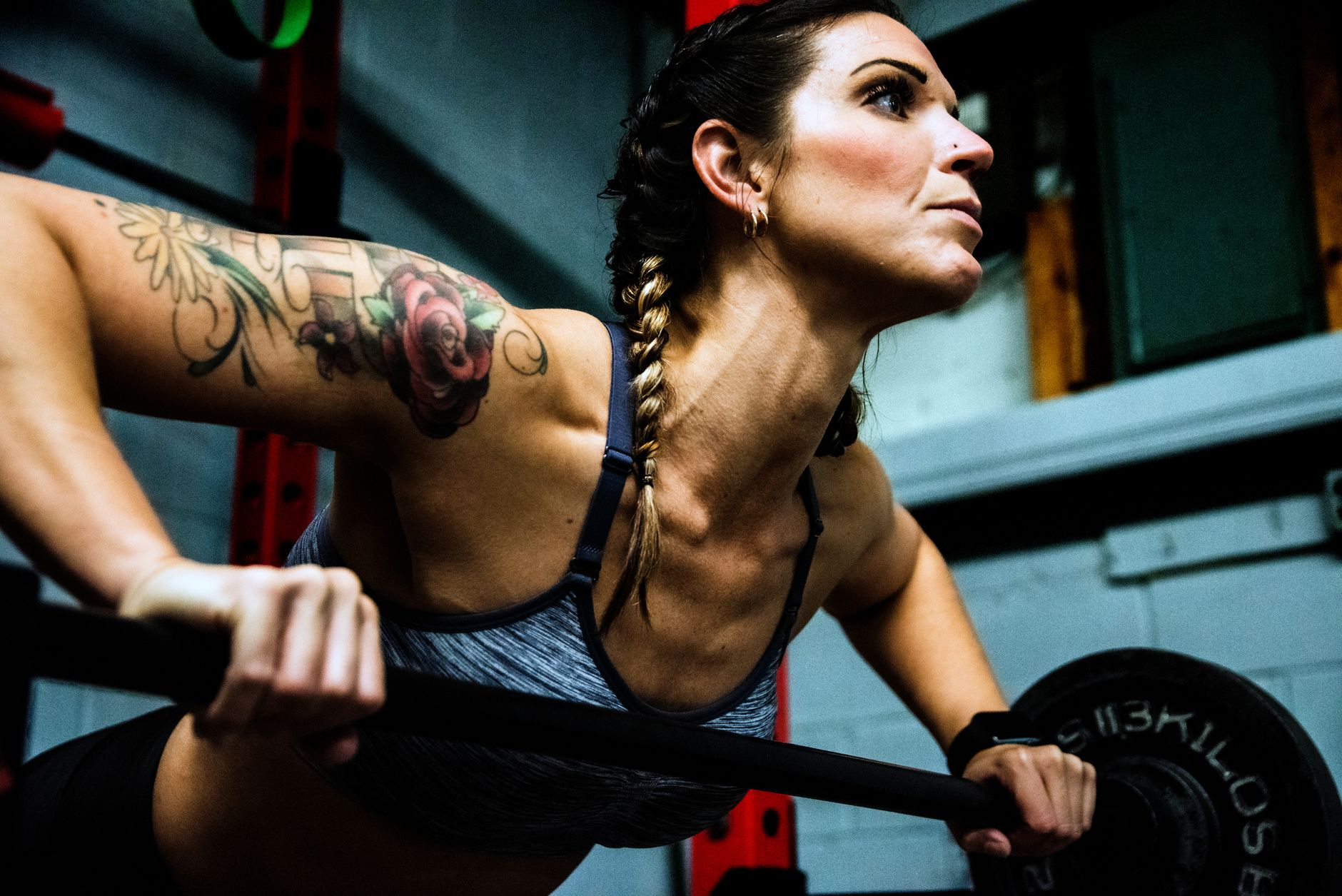
The science is unambiguous on two points: resistance training and adequate protein intake are the most powerful interventions for preventing and reversing age-related muscle loss in women. Resistance training (also called strength training or weight training) creates mechanical stress on muscle fibers that triggers the body to repair and grow stronger. The American College of Sports Medicine recommends at least two to three sessions of resistance training per week for older adults, targeting all major muscle groups. For women over 40, prioritizing compound movements (squats, deadlifts, presses, rows) offers the most metabolic and muscular benefit per minute of exercise. Protein provides the amino acid building blocks that muscles need to repair and grow. Without sufficient dietary protein, your muscles cannot respond to the training stimulus. Think of it this way: resistance training is the signal, and protein is the material. You need both for the construction to happen.
How Much Protein Women Over 40 Actually Need
The standard RDA for protein is 0.8 grams per kilogram of body weight per day. This recommendation was designed to prevent deficiency in sedentary adults, not to support muscle preservation in aging women who exercise. Multiple research groups have concluded that this amount is insufficient for midlife women. A 2016 position paper from the Protein Summit found that 1.2 to 1.6 grams of protein per kilogram of body weight per day is more appropriate for older adults who want to maintain muscle mass (PMID: 26960445). For a 150-pound (68 kg) woman, this translates to roughly 82 to 109 grams of protein per day, compared to only 55 grams recommended by the standard RDA. To put this in context: a 3-ounce chicken breast has about 26 grams of protein, a cup of Greek yogurt has about 17 grams, and two eggs have about 12 grams. Reaching the higher target requires intentional planning at every meal. Spreading protein across three to four meals (rather than eating most protein at dinner) has been shown to better support muscle protein synthesis throughout the day (PMID: 25979135).
Plant-Based Protein: Can It Work?
Yes, plant-based protein can be sufficient for muscle preservation in women over 40, but it requires a bit more strategy. Plant proteins are often “incomplete,” meaning they lack one or more essential amino acids, and they tend to be less digestible than animal proteins. However, combining plant protein sources (for example, rice and beans, or lentils and seeds) throughout the day can provide all essential amino acids in adequate amounts. Legumes, tofu, tempeh, edamame, quinoa, and hemp seeds are among the richest plant protein sources. Women eating mostly plants may need to target the higher end of the protein range (1.4 to 1.6 grams per kilogram) and may benefit from a plant-based protein supplement to fill gaps, particularly leucine, which is the amino acid most directly linked to triggering muscle protein synthesis. Leucine content is lower in most plant proteins compared to whey or egg protein, so ensuring sufficient total leucine intake is important.
The Role of Creatine for Women
Creatine is one of the most researched supplements in sports science, and it is increasingly recognized as beneficial for women in midlife, not just competitive athletes. Creatine supports the production of adenosine triphosphate (ATP), the primary energy currency of cells, which helps muscles perform better during resistance training. More relevant for women over 40: creatine has been shown to help preserve and increase lean muscle mass when combined with resistance training, and it may have cognitive and bone health benefits as well. A 2021 meta-analysis in the Journal of Strength and Conditioning Research found that creatine supplementation combined with resistance training significantly increased lean body mass in older adults compared to training alone (PMID: 30418736). A standard dose of 3 to 5 grams per day of creatine monohydrate is effective and well-tolerated. Women sometimes hesitate due to concerns about bloating, but research suggests this side effect is far less common at lower doses and in women compared to men.
Supplement Strategy for Muscle Maintenance
A smart supplement strategy for women over 40 who want to preserve or build muscle mass centers on filling the gaps that diet alone may not cover. This includes a high-quality protein supplement for days when whole-food protein targets are hard to hit, creatine monohydrate for training support, and key micronutrients that support muscle health, including vitamin D (which supports muscle function and is deficient in many women), magnesium, and B vitamins involved in energy metabolism. A targeted lean muscle formula designed for women over 40 can streamline this process by combining these evidence-backed ingredients in clinically supported doses.

Lean Muscle Formula
Designed specifically for women over 40, this formula supports lean muscle preservation and metabolic health with essential amino acids, creatine, and key vitamins for daily strength and energy.
$55/month with subscription
Shop NowRecommended by Happy Aging
lean muscle formula
Science-backed formula designed for women over 40.
Try lean muscle formula — from $55/month →Frequently Asked Questions
At what age does muscle loss start in women?
Muscle loss begins around age 30 but accelerates significantly after 40, particularly as estrogen levels start to decline in perimenopause. The rate of loss increases again after menopause without active intervention.
Can women over 40 actually build muscle, or just maintain it?
Women over 40 absolutely can build new muscle with consistent resistance training and adequate protein. The process is slower than in younger years, but research confirms that muscle growth (hypertrophy) is possible at any age with the right stimulus and nutrition.
How many days per week should women over 40 lift weights?
Two to four sessions of resistance training per week targeting all major muscle groups is the evidence-based recommendation. Allowing 48 hours of recovery between sessions targeting the same muscles is important for repair and growth.
Is 100 grams of protein per day enough for women over 40?
For most women over 40 who weigh between 130 and 160 pounds, 100 grams of protein per day falls within or close to the recommended range of 1.2 to 1.6 grams per kilogram. Heavier or more active women may need more.
Will losing weight cause muscle loss?
Weight loss can cause muscle loss, particularly if the caloric deficit is large, protein intake is low, or resistance training is absent. Prioritizing protein and strength training during any weight loss effort significantly reduces this risk.
References
- Villareal DT, et al. Obesity in older adults: technical review and position statement of the American Society for Nutrition and NAASO. Am J Clin Nutr. 2005;82(5):923-934. DOI: 10.1093/ajcn/82.5.923
- Kitajima Y, et al. Estrogen receptor signaling in skeletal muscle. J Appl Physiol. 2013;115(9):1363-1370. DOI: 10.1152/japplphysiol.00361.2013
- Murphy C, Koehler K. Energy deficiency impairs resistance training gains in lean mass but not strength. Med Sci Sports Exerc. 2022;54(1):171-179. DOI: 10.1249/MSS.0000000000002705
- Stokes T, et al. Recent Perspectives Regarding the Role of Dietary Protein for the Promotion of Muscle Hypertrophy with Resistance Exercise Training. Nutrients. 2018;10(2):180. DOI: 10.3390/nu10020180
- Mamerow MM, et al. Dietary protein distribution positively influences 24-h muscle protein synthesis in healthy adults. J Nutr. 2014;144(6):876-880. DOI: 10.3945/jn.113.185280
- Lanhers C, et al. Creatine supplementation and upper limb strength performance: A systematic review and meta-analysis. Sports Med. 2017;47(1):163-173. DOI: 10.1007/s40279-016-0571-4


